

How it works

Within the Green Flag State Initiative framework, flag states encourage and facilitate the voluntary adoption of high-quality daily emissions reporting by shipowners, whilst promoting awareness of practical decarbonisation best practices.
Contact us
GFSI principles

By signing the Green Flag State Initiative and joining the next-generation Green Flags, flag states commit to the following set of principles.

1. Accountability

Green Flag States commit to environmental leadership and recognise that transparent and reliable emissions reporting is essential to the credibility of global maritime decarbonisation efforts. 


By signing the Green Flag Standard, registries commit to encouraging, promoting,and facilitating high‑quality daily emissions reporting among shipowners under theirflag. Strengthened accountability not only supports international climate objectives, but also enhances the reputation, competitiveness, and long-term resilience of our fleet.


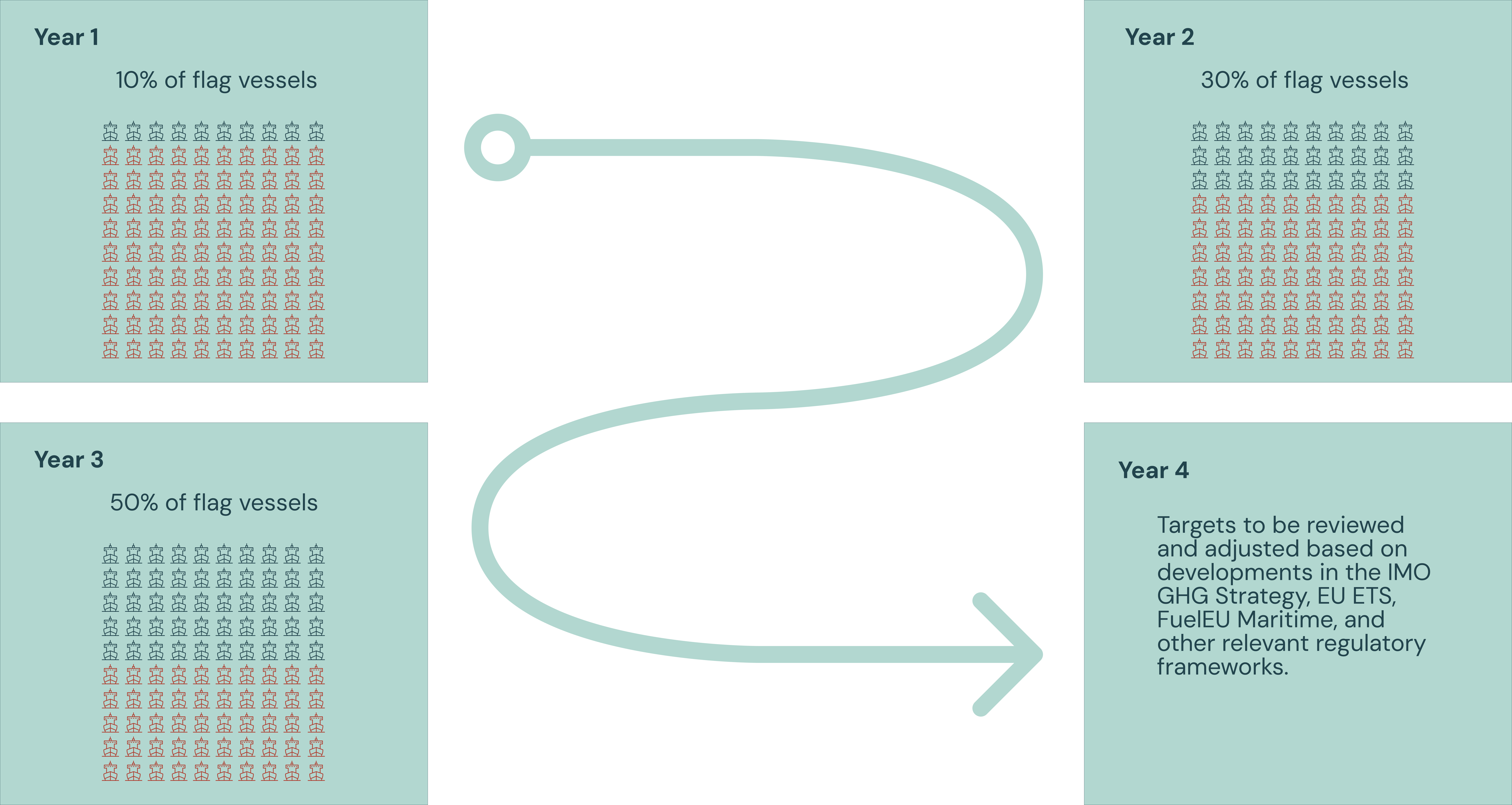
Signatory flag states align with the GFSI onboarding trajectory, with the objective of onboarding 50% of vessels within their fleet over the first three years. This phased approach provides a practical, predictable pathway for ship owners whilst clearly demonstrating the flag’s commitment to measurable progress and continuous improvement.

Accountability
2. Acknowledgement

Green Flag States recognise and reward validated climate performance with a Green Flag Certificate and optional incentives.

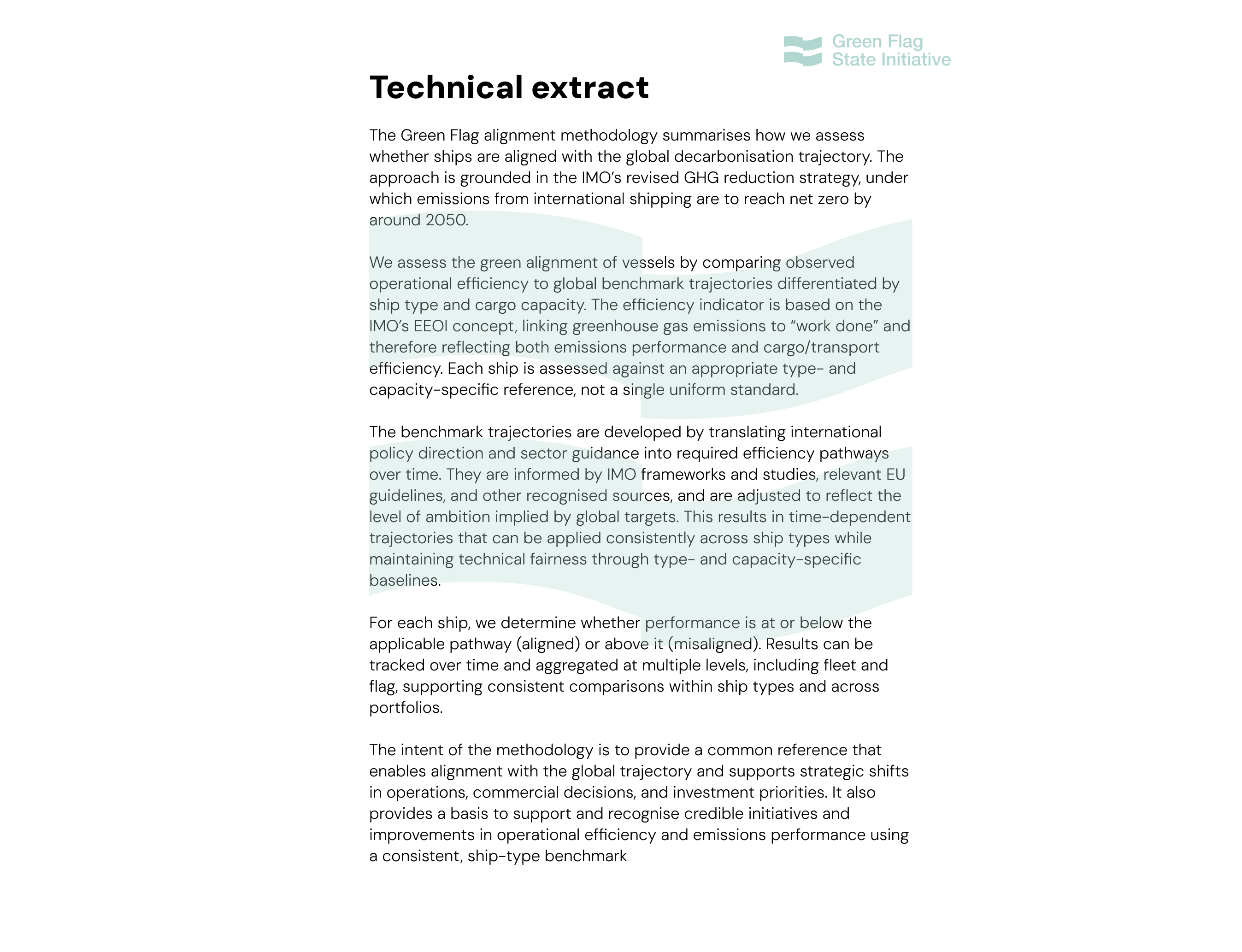
Suggested performance benchmarks for ships eligible to receive the Green Flag is stated in the GFSI technical guidelines document.

The benchmarks will be discussed and ultimately defined amongst the participating GFSI flags.


There is an annual ceremony where the Green Flag Certificate will be rewarded to the vessels eligible to receive the Green Flag.
TBF
3. Transparency

Participating flag states promote transparency by disclosing climate performance at an aggregated level, ensuring meaningful insight while respecting commercial sensitivities.

Through participation in the annual GFSI review, Green Flags establish a reliable and consistent foundation for measuring, comparing, and advancing decarbonisation efforts. This process enables flag states to demonstrate progress, identify trends, and support evidence-based policy and incentive design.

4. Alignment

Green Flag vessels report daily emissions data in alignment with IMO DCS and EU MRV frameworks. This alignment reduces administrative burden for shipowners, streamlines validation and verification processes, and supports the effective implementation of the IMO GHG Strategy.

By operating within these established reporting systems, the Green Flag framework ensures that emissions performance can be consistently validated across regulatory and market-based measures built on IMO DCS and EU MRV.

It also enables robust modelling and assessment of the impact of existing and emerging emissions regulations at both fleet and vessel level, supporting evidence-based decision making by flag states.

TBF